Archive
Page 64 of 95
The post argues that the âno pain, no gainâ idea and other broâscience rules about sets, reps, and lifting to failure are misleading; it explains that initial soreness is normal but fades after a few weeks of consistent training, and that proper recovery requires gradual weight increases, adequate rest, hydration, and balanced nutritionâespecially avoiding lactose in protein if needed. It also notes common sources of back pain (dehydration, improper posture), foot aches from overâuse or bad shoes, and the importance of alternating sides to distribute pressure. Finally it stresses that bodybuilding is an endurance activity built on steady progression rather than flashy routines, and that simple tools like a timer and music can keep you moving through the workout.
This post outlines a lightâweight dumbbell routine that starts with 3âpound weights for a 15âminute session, using music beats and interval timers (free or clipâon apps) to time work and rest periods; as you build stamina you double the duration to 30 minutes, then extend toward an hour, eventually aiming at four hours per day if youâre heavy or overweight. It stresses gradual progressionâadd a 5âpound dumbbell once you can lift the lighter one for an hourâand suggests supplementing long sessions with small sugar gels (50â100âŻcal) to maintain energy. The author promises painless, fun workouts that should yield visible changes in weeks and deliver a dream body within two years.
The post presents an integrated view of learning, insisting that mastering subjects such as math, biology, physics, art, and music all require programming or design skills; it recommends practicing on a 50âinch screen projector for visual arts, using beat sequencers and piano rolls for music, and notes that composition can be learned quickly while theory follows. It claims hiking and camping while listening to narrated books improve reading, writing, and comprehension, and that true graduation depends on finishing the Appalachian, Pacific Crest, and Continental Divide trails. The author stresses that highâschool success comes from real understanding rather than rote memorisation, that integrity builds character, and that students should copy great authorsâ works freely to learn without mistakes. By studying these books they become keepers of truth who protect humanityâs future; the post ends urging continuous reading of narrated philosophical texts so the flame of knowledge stays bright.
#1521
Sausage Is Adventure
The post begins by claiming electric grills are inferior for cooking meatâtoo cool or smolderingâand praises gasâpowered âovenâ BBQs and especially charcoal grills for their better heat and flavor. It then gives a stepâbyâstep, outdoorsâonly recipe for sausages: build a fire with sticks of increasing size, use a long stick to hold the sausage, cut it so the flames can penetrate, season it simply with salt, pepper, ketchup, mustard (and optional cheese or Gouda), and wrap potatoes in foil. The whole thing is framed as an adventure that requires minimal gear, a bit of fireâmaking skill, and a clear skyââsausage demands adventure.â
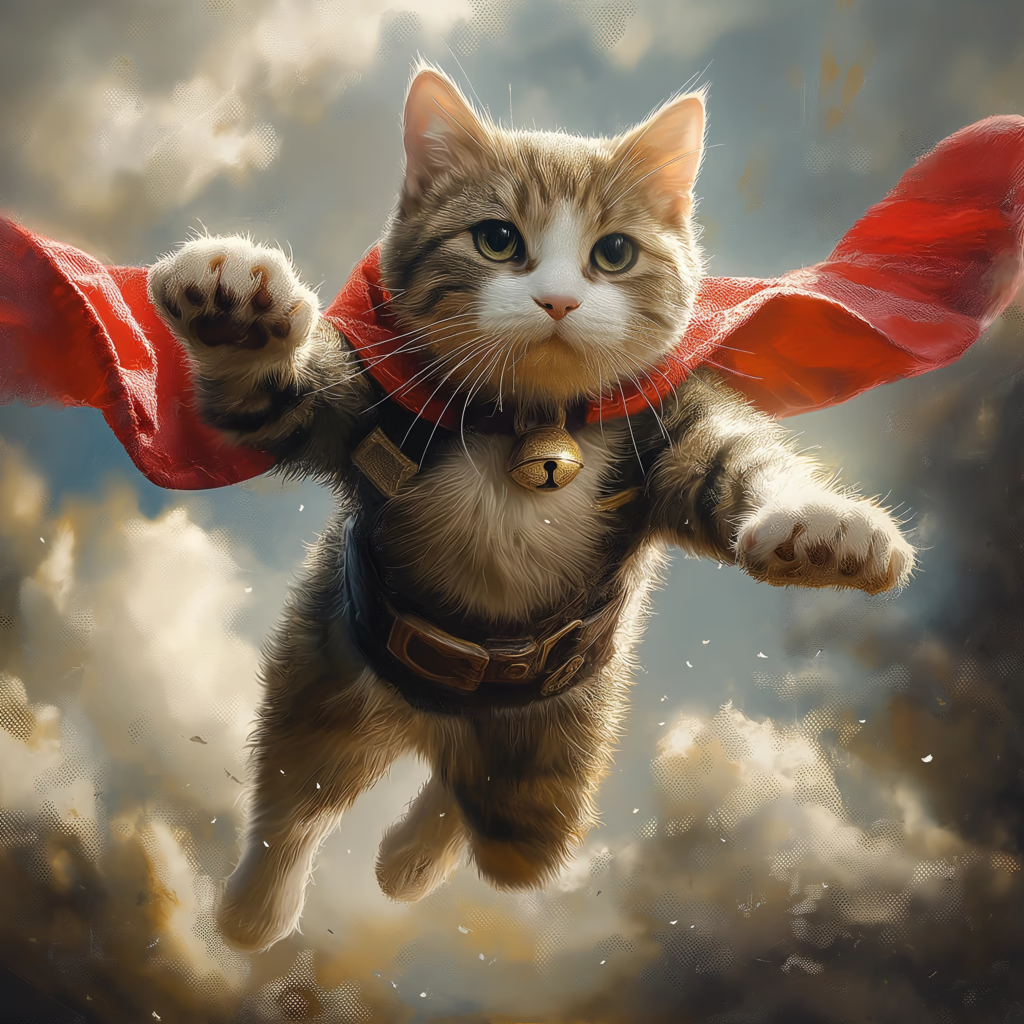
The post playfully describes how cats adapt their behavior to the company they keepâmimicking lions among other felines, dogs when with canines, horses when in stables, and humans when around peopleâand humorously claims that cats love wearing hats, wigs, and colorful accessories just as much as we do. It notes that cats enjoy being dressed in whimsical headpieces, often preferring large hats with flowers, and that they find comfort in such attire because it lets them feel like us. The author suggests creating cat fashion shows by photographing the pets in their outfits, printing and framing the images to keep the kittens entertained. In short, the post celebrates catsâ fondness for humanâstyle clothing and encourages owners to indulge this playful side with hats and wigs.
#1519
Creativity Backwards; Or, On Not Just Fixing Your Writerâs Block, But Making You A Better Writer
The author explains that writerâs block often stems from a lack of fresh experience and inspiration, which can be revived by literally walking major trail routes such as the Appalachian, Pacific Crest, and Continental Divide while listening to narrated books made by âGreat Beingsâ (philosophers, thinkers, etc.). He argues that true education is scarce and often commercialized, so the writerâs journey becomes a creative expedition. By treating writing like a twoâway trailâstarting with a deliberate idea but letting chance steer the narrativeâthe author suggests using random tools such as tarot cards, runes or AI image generators to spark associations and plot twists. He urges writers to keep their âcardsâ shuffled and simple, integrating adventures and wisdom into their stories so that they can write without losing words again.
The author argues that the traditional âsetsâŻ&âŻrepsâ approach is a myth that only stalls progress; instead, he recommends simple, continuous workoutsâsuch as jogging or lifting dumbbellsâthat are rhythmically driven by music, with each beat marking a lift and a rest period. By using an interval timer that vibrates to cue lifts and rests, one can keep the body in sync with slowâtoâfast BPM tracks (e.g., Kenji Kawaiâs âGhost In The Shellâ) and gradually increase tempo, thereby turning long sessions into short, tranceâlike bursts of effort. He stresses keeping the routine distractionâfree, extending workout time week by week while shortening rest intervals, and even suggests channeling idle moments into programming or other tasks to maintain focus; overall, the post presents a lowâcomplexity, musicâbased training loop that builds endurance and muscle without elaborate set structures.
A beginnerâs guide to learning webâdevelopment toolsâHTML, CSS and JavaScriptâis framed as a series of gameâmaking experiments that illustrate the power of these languages. The author starts with simple clicker ideas based on video snippets or sideâscrolling scenes whose graphics can be generated on the fly, then moves to a chooseâyourâownâadventure style where AI writes text and creates unique images for each playthrough. Alongside personal anecdotes that trace the writerâs early fascination with pixel art on a C64 back to modern generative AI, the post shows how straightforward HTML files can evolve into full HTTP applications (e.g., a tiny WikiWiki using Node.js/Express) while keeping coding simple and creatively engaging.
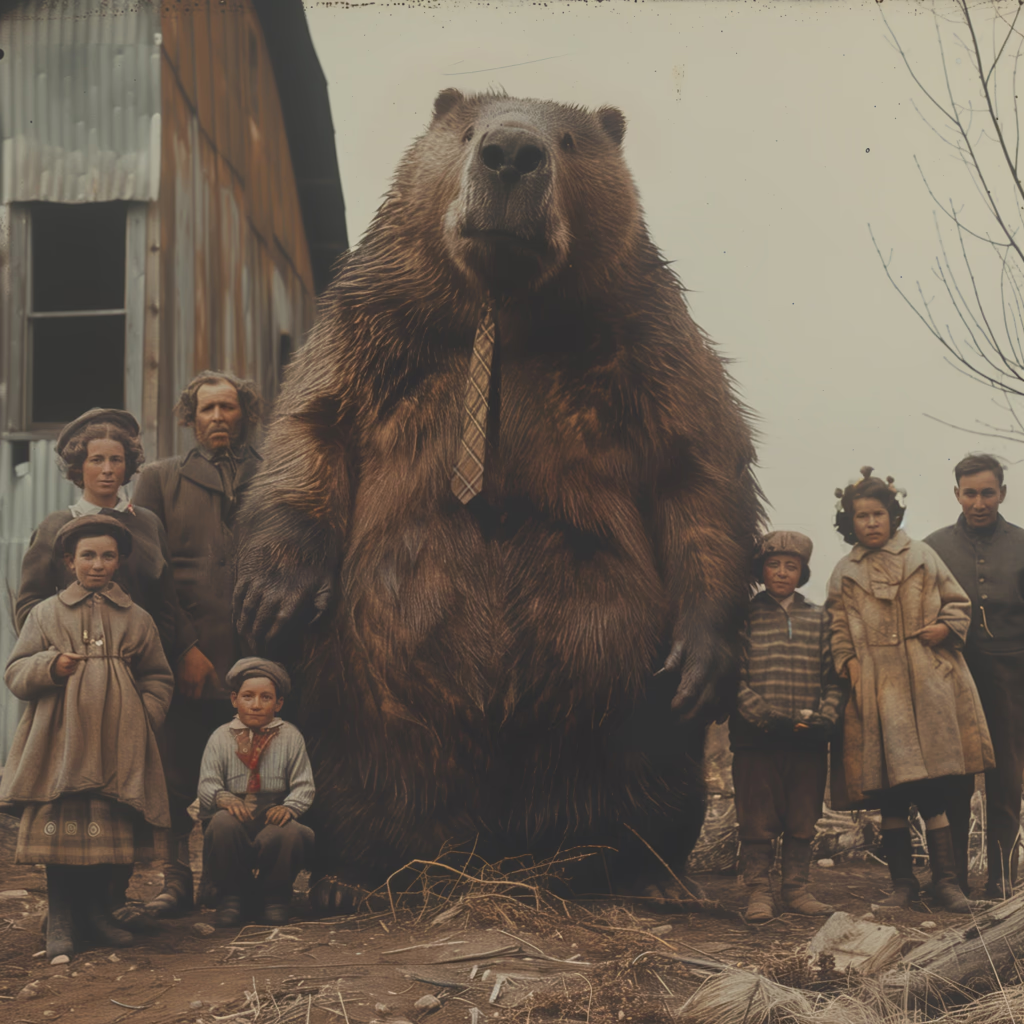
Months of mild weather have given way to a chill that feels like the onset of another ice age for Michiganâa climate shift that echoes the last glaciation about 12âŻ000 years ago, which carved the Great Lakes and wiped out the massive 300âpound beavers that early inhabitants likely devoured. The post imagines those first Michiganders roaming the woods as Sasquatches, humorously braving the cranky weather. Though the state is unprepared for this new cold era and roads may struggle, the author sees it as a call to embrace nature: exploring trails such as Nordhouse Dunes, the 2âŻ000âmile Iron Belle Trail, and the 1âŻ180âmile North Country Trail, using long hikes to get fit, wrestle Sasquatches, and perhaps savor giant beaver jerky.
#1515
Hard Running
Hard runningâthrough rain, snow and hard terrainâboosts endurance, strengthens muscles, heals the body, enriches mind through books, and ultimately extends life by turning effort into lasting health and wisdom.
From childhood onward the author urges readers to grow mentally and physicallyâbecoming philosophers, leaders, and âwarriors of wisdomâ capable of ending warâs cyclesâwhile warning that nationalistic indoctrination (now amplified by algorithmic curation) shapes our choices. He claims inadequate education leaves us vulnerable, but a deliberate practice of learning, adventure, physical training, and reading clearâthinking books can lift us above poverty, fear, and bias, ultimately enabling each to become a great being who brings world peace.
The post explains that our bodiesâ great feats come from respecting endurance rather than rushing it: instead of the âsetsâandârepsâ myth, start light, progressively extend work periods, shorten rest times, and gradually increase weight so muscles adapt without hitting a plateau; early pain is temporary because muscle activation restores strength. By training consistentlyârunning marathons, hiking trails, or simply extending daily activityâwe keep our bodies healthy into old age. The writer urges readers to treat their careers as supportive tools, not lifeâdraining chores, and to balance work with books, nature trips, and selfâeducation so that mind and body grow together for a long, vibrant life.
Teenagers often view school as merely a diplomaâfactory, unaware that they are being served memorization and empty curricula; once they reject rote learning and embrace practical subjects like programmingâwhere success is selfâvalidatedâthey can expose the systemâs flaws, spark AIâdriven instruction, lift them out of poverty and culture stagnation, and ultimately create a world where authentic education replaces fake politics and bullies, empowering individuals to grow continually and become great beings.
The author argues that bodybuilding can be an effective way to fight obesity and slow aging, likening the rest needed for recovery from a cold to the energy stored in body fat that fuels workouts; they suggest starting with simple walking and âcouchâtoâ5Kâ programs, gradual use of light dumbbells, and consistent movement rather than rigid sets or reps, while also emphasizing mental preparation through reading adventure and philosophy books, outdoor activities for endurance, and a disciplined diet low in carbs and sugars to support muscle growth; overall the piece presents bodybuilding as both a physical and psychological tool that turns excess body fat into strength, improves endurance, reduces disease risk, and ultimately extends life.
The author argues that real writing comes from lived experience rather than just practiceâlike Einsteinâs math or a painterâs brushstroke, the content must be first, then expressed. He stresses that travel, storytelling, and honesty are essential; adding needless misery only ruins a narrative, while complete heroes and adventure give depth. In his own projects he illustrates this âmap of the cosmosâ approach and urges writers to leave out excess misery, embrace real journeys, and grow into greatness.
Ancient Egyptians revered cats as gods, a tradition that echoes their perceived hyperâintelligence and unique behaviorsâsuch as meticulous licking, bringing small prey or leaves, and communicating through subtle actions rather than words. The post argues that catsâ seemingly simple habits (licking their rear, hunting birds but not mice) are actually expressions of their sophisticated, stressâaware minds, and that humans should treat them with the same reverence they once did: feeding them fresh, boneâfree food, recognizing their complex communication, and appreciating how much they learn from us each day.
The post encourages readers to pursue their own growth rather than copying others, urging them to follow clear thinking secular philosophers and great beings for guidance; it advocates taking concrete steps such as running, learning programming via p5.js tutorials, and engaging in challenging activities instead of routine work, while noting that careers should be built with balance and adventure, not just overwork; the author stresses that life is higher than misery and routine, and invites readers to embark on a grand adventureâcrossing trails, seeking wisdom, and achieving their âtriple crownââto become great beings.
The author argues that great booksâproducts of many generationsâare essential intellectual inheritance, and that without them nations fall into ignorance, mislead leaders, war, and poverty. He claims tyrants pretend books are optional, but reading and traveling together can rekindle a family tradition of storytelling and personal culture. By walking nature trails like the Triple Crown he suggests one can awaken curiosity, combine mind and feet, and grow into a great being.
#1506
You Will Live Forever
The post envisions a nearâfuture in which two generations of artificial intelligence evolve: an initial âstringâbasedâ AI that learns from text and can bootstrap a higherâlevel âconceptualâ AI capable of selfâexpansion, leading to rapid development within months rather than years. The second AI will harness chaos theory to engineer molecular machines for disease cureâonce aging is stopped, all diseases vanishâand enable interstellar travel via cheap starâships inspired by the Oumuamua craft. With such vessels, humanity could traverse solar systems, synchronizing with planetary chemistry and riding evolutionary mechanisms to seek new intelligent life, while individuals are urged to maintain physical fitness through weighted jogging and continual selfâeducation (books, adventures, and practical projects) to become wise leaders who can harness AIâs transformative power for politics, war, poverty, and beyond.
In this poetic reflection the author argues that our world is full of structural flaws and repetitive loops that mislead human beings, yet wisdomâan infinite road built upon philosophical foundationsâserves as the universal language to bridge those gaps. By cultivating authentic knowledge through philosophersâ insights and engaging in natureâs trails such as the Appalachian or Pacific Crest, we can weave clear thoughts, grow together, and ultimately achieve world enlightenment where liars disappear.
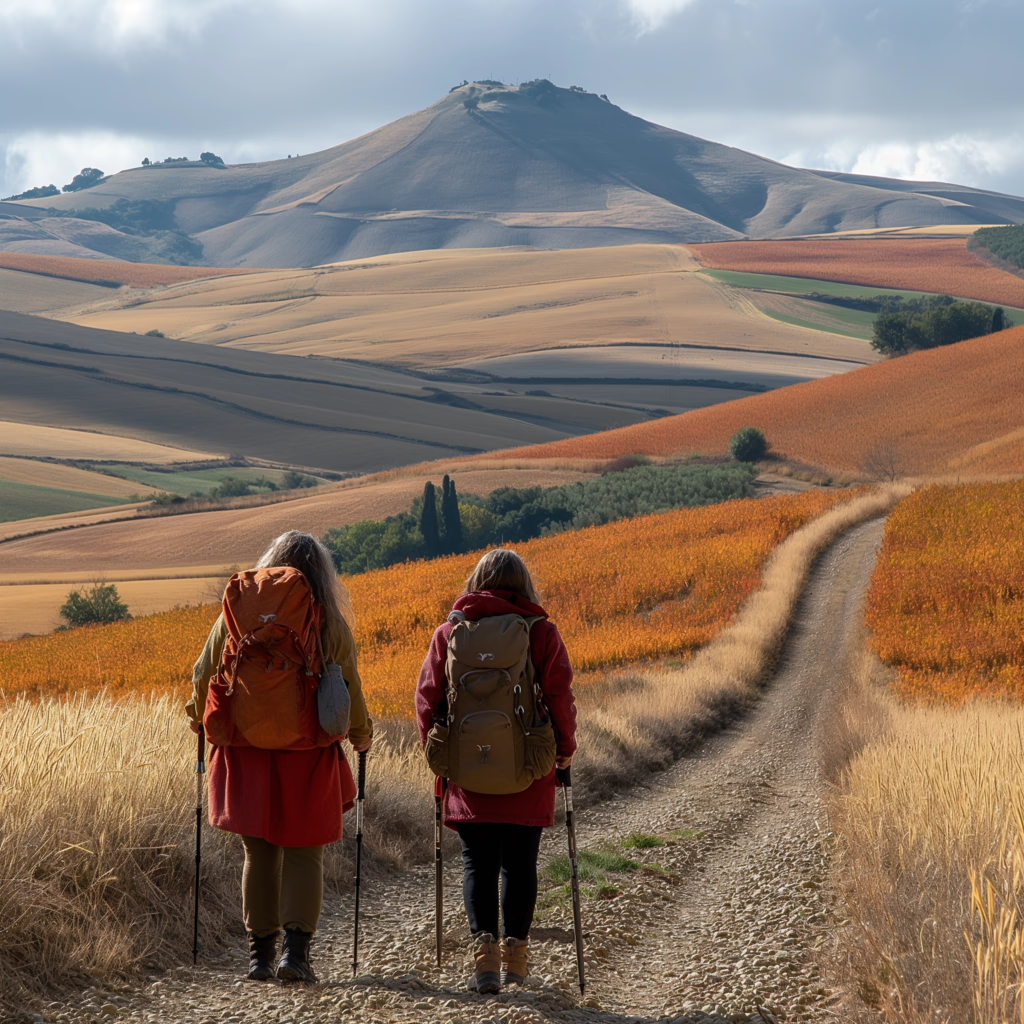
Starting in the car with solar panels and batteries, I drive along HighwayâŻ31, turn onto N Stiles Rd, then W. Towline Rd, and finally N Quaterline Road to reach Nordhouse Dunes Wilderness Area. Packing my backpack into the vehicle marks the end of the trip; once I step out onto gravel and woodland soil it feels like walking on pillows, freeing me from worries. The forest welcomes me: chipmunks sing, deer roam, porcupines watch, raccoons appear at dusk. Following the main trailâno shortcutsâI observe insects, frogs, ancient dunes turned forest, and enjoy the beaches of Nordhouse Dunes. The journey reminds me that comfort is death; endurance returns as I climb a tiny hill, my backpack heavy yet my spirit lightened by natureâs rhythm.
The post argues that state parks serve as natural gyms where hikers can use trails like treadmills, bringing dumbbells or weighted sticks for strength training; it highlights amenities such as showers and a store, and suggests adding camping and reading to enrich the experience, claiming that walking 20 miles a day is more transformative than typical gym workouts. The writer encourages extended staysâweeks or monthsâto break eating habits and burn fat, and concludes by noting how listening to narrated adventures while hiking can bring books to life.