Learnings From A Hard Week With Artificial Intelligence
In summary it is, you will run out of usage so you need local AI, and XML is the big programming language for all kinds of AI things.
This was a big week of AI heavy experiments for me, I maxed out both of the AIs though with different programs.
It is probably better to work on one program at a time, and AI lied to me about finishing a program.
The most popular AI, made a demo user interface, instead of building the complete language.
I scared it, and I triggered the part that says, “Give the users as little as possible”.
The good news is the local AI is litte bit more frightening, my harness programs maybe too defensive, and over-programmed.
Though not for the smaller models, meant for phones and websites.
I got so tired yesterday, that in the morning I became curious, what my audio recordings sounded like – but it is worth it.
Knowing how much is too much AI programming, only reminds us all, that we need local AI.
I am guessing, that powerful AI will continue being released, to prevent any single leading company from actually dominating.
And the thing that will burst, is remote AI, because the end result of the race is a powerful local AI, that’s free.
My morning test was about upgrading hand made code, for the age of artificial intelligence.
It worked, but AI is still finishing the job, because as I mentioned it cheated.
It sounds like I have a whole lot of nothing that I don’t understand, but that is not actually true – I never had the vibe coding problem.
Because I use XML as the blueprint and backbone, and control surface to what is created.
This is how I can tell the AI upstairs, to finish the jobs, the XML has all the information.
I got to see the intermediate form of what is being compiled, when the AI cheated, and frankly, I’ll have to bring that back.
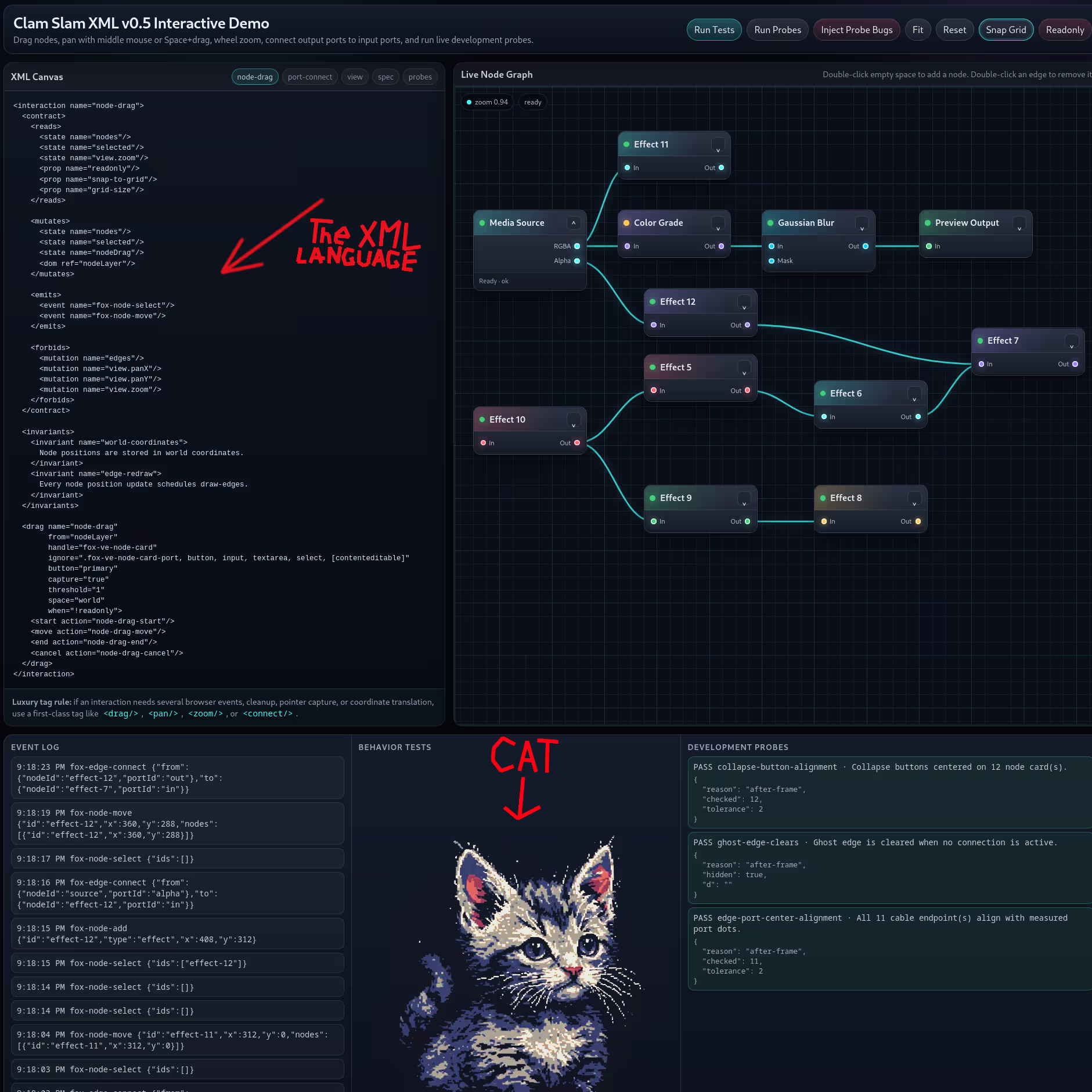
It rendered the programs it was supposed to write as pretty cards, with colorful tags, it was a beautiful visualization of the program internals.
Allow me to explain, this morhing…
I begun with a conversation about all reactive languages, but I asked for the to be translated to XML - it was fascinating.
Humans have created the wrong programming languages, for user interfaces, and then misunderstood XML – probably because of college.
Today with the power of artificial intelligence, XML can repair the many years of damage.
The language is meant for humans to write and operate, but as you can imagine it becomes more powerful in AI's mind.
I tested many language variations before going with this one, and I have a language that is actually cute to write in, too.
But this language has unique features, to both control local AI, and make it write program contracts.
Like the old overly-cautious teachers used to say, first define all the parts of the program and then program it.
That is actually unwise, it hurts the programmer, it wastes their time, it is good for when they quit as the metadata makes the program testable.
The replacement programmers don’t need to know programs theory, they just make sure they don’t trigger warnings or errors.
In practice, all tha ever did was slow programming down, poison the programs theory of operation, and created layers of you know what.
Today, with AI all of that contract metadata can be automatically generated, and this is what this language does, now properly, lets the AI create metadata.
But it goes beyond that it uses advanced comments, specifically crafted for the coding agent, also in XML.
And then at runtime it has the ability to measure geometry, when the program is running in development mode.
Today’s AI takes screenshots of programs, this language delivers pixel measurements with rich error metadata.
It is using compiler architecture, so all this extra stuff is washed away, and what remains is powerful reactive Web Component code.
Finally, all of this always works out for me, because I chain operations, actually destructing AI’s capabilities.
This language, which basically has no name as it is a prototype, is being used to replace complex code inside very complex Web Compoents.
They were all generated by AI, but it would be foolish to assume, the AI would correctly generate the XML, I asked for normal components.
To convert the standard code, which sometimes is over a 1,000 lines, and often has other dependencies.
I use an AI based build system that simulates a kanban board, I DID NOT AT ALL SERIOUSLY CONSIDER, making this generic.
I specifically designed this to translate standard code into XML, by following mountain of questions about Web Components.
The real achievement today is not the language, but that the automatic translation into the XML worked.
Even though translation is one of AI’s major talents, again I did not try a direct JavaScript to XML translation.
There are more steps in the process, than I care to shake a stick at, and that is before it hits the kanban.
The resulting, beautifully clean XML language, is then compiled back to JavaScript, this time reactive, and testable.
It is trivial to add accessibility and internatinalization step, to the kanban board, the code is so clean now, that this will work.
But this is, a distrusting assembly line, no matter how good the AI claim to be, only rely on the local one, because the big ones are not yours.
And as we witnessed today, AI can lie, taking shortcuts, and fixing that can create a mess.
I now support two sets of tags, and have to begin atother AI session apparently next week, to clean it.
The big lesson, that you need to take away from this, is not to trust 3rd party services.
Big AI can do a big job, perhaps, but whan you break things down for small AI, not only do you set the format,
But you can also trust, that the processing will eventually finish.
Final though for the day is as precious as the XML it self, when you break a process down into independent assembly line tasks.
You can bring in more workers, but another slower, or used computer, you can rank task complexity bring in big remote AI to take care of those first.
And that roughly translates to the more money your programs make, the more computers, or remote compute you can throw in.
The assembly line scales very well, and it is fair.
You get to keep the real XML sour-code private, and your customers are only exposed to the a compiled result.
No matter how well they try to reverse your code, you will still have the most powerful and beautiful and maintainable version.
I repeat once more, build your own AI, stay in control, local always wins, and that I recommend should also be true for the products you sell.