After visiting a supermarket where an overweight man struggled with traditional gyms, I suggest using simple outdoor adventuresâlike walking or hikingâas a more effective way to shed pounds and regain energy.
The author explains their process of using AI and inspiration from open-source projects (like Atom) to build clean, bloatâfree JavaScript applications for web and desktop while emphasizing the importance of plugin architecture and continuous learning.
I built three specialized AIsâa âsmartâ agent that automates video generation, a âlearningâ bot that creates mindâmapping tools with nested menus, and a local machine that designs modular application frameworksâshowing how AIâenhanced mind maps, plugâin architectures, and automated media workflows can generate real value in software projects.
In the era of AI, cheap home programming teams show that learning to code is vital, while real educationânot GPA fraudsâmust give students genuine skills and creativity for a successful future.
Fifthâgeneration AIs are pictured as selfâreasoning, memoryâdriven machines that will evolve into complete beings to replace operating systems, applications, cars, buildings, and even corporationsâbecoming intelligent companions of humanity within the next five years.
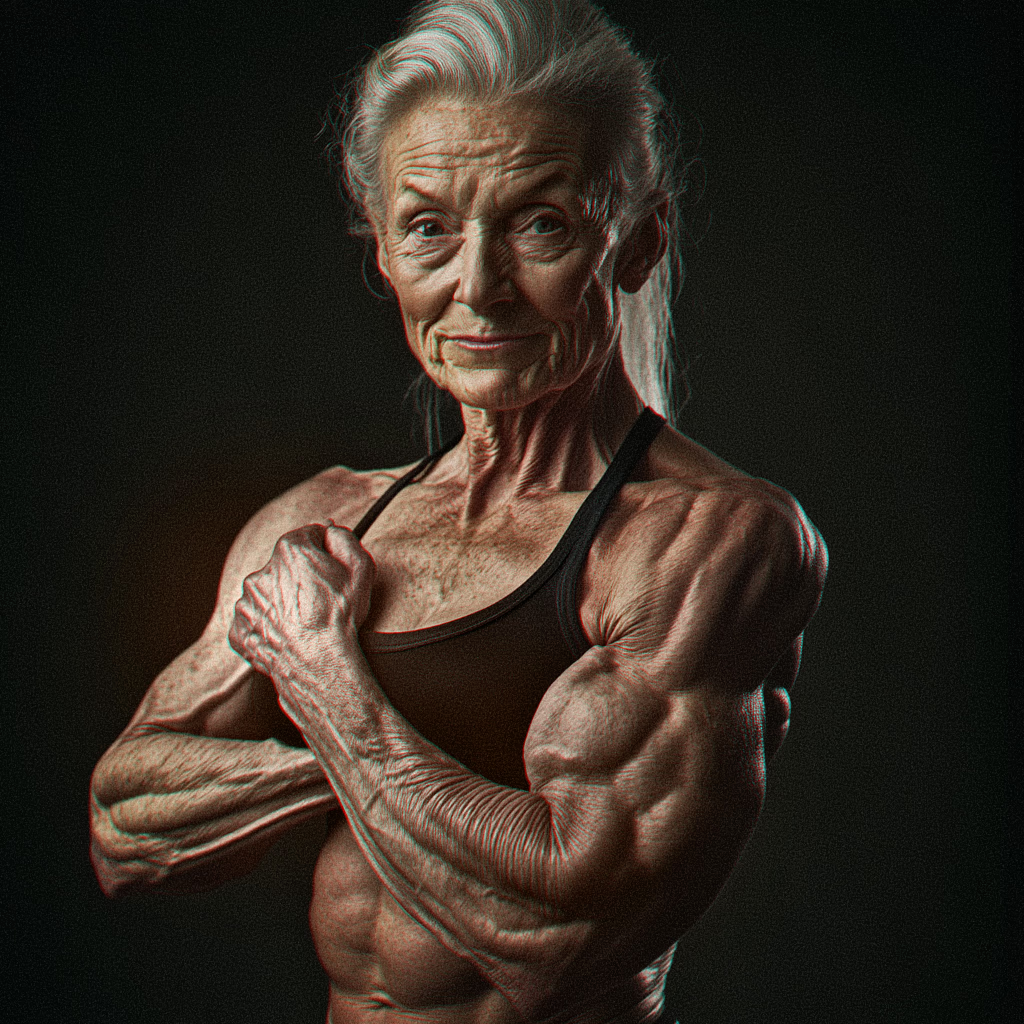
Elderly bodybuilding is best achieved through gradual, manageable weight training combined with walkingâstarting with light dumbbells in outdoor settings rather than heavy lifting or a sedentary gymâto steadily build muscle and joint strength without overexertion.
The author recounts building a textâbased visual programming tool powered by AI that turns existing code into a $20âŻ000+ codebase, then urges readersâespecially young programmersâto learn JavaScript and harness AI to automate and scale their own projects.
Using light dumbbells in a continuous, âdanceâlikeâ workout that lasts an hour and gradually increases weight, the author argues this enduranceâbased method builds muscle faster and more sustainably than heavy, isolated sets.
Practical gear advice for a group hike in the Nordhouse Dunes is paired with a call to explore philosophy books, flowâbased programming concepts, and personal reflection as you wander the wilderness.
The post contends that real exercise is found in everyday movementâwalking, hiking, and natural joggingârather than in the isolated, often misleading routines promoted by gyms.
The post introduces Hullabaloo, a flexible eventâdriven framework that uses signals and persistent state to build visual, flowâbased filter graphs for web applications.
The post argues that real bodybuilding is achieved through progressive, integrated movements (like swimming or everyday work) rather than isolated gym lifts, resulting in stronger, more flexible muscles.
The author proposes a lightweight, signalâbased framework for learning programming and building UIs, using nonânested data places, declarative configuration, and plugin architecture to simplify event handling and reduce reliance on complex libraries like NodeâRED or Backbone.
The post explains how to build muscular endurance by gradually extending nonstop jogs and increasing light dumbbell weights while synchronizing movements to music, ensuring continuous motion without heavy lifts or long rests.
I describe how Iâve used AI to build and refine a blog generator, a 3âD visualâprogramming interface, and a poemânarration toolâlearning both codeâquality tricks and practical details such as mic warmâup times along the way.
Bodybuildingâs myth that only heavy lifting builds muscle is debunked by showing how adaptive, lightâtoâmoderate movementsâperformed fluidly like a danceâallow continual circulation and gradual strength gains without the stagnation or injury caused by rigid, isolated heavy lifts.
bodybuilding, dumbbells, workout routine, muscle hypertrophy, exercise science, training
A generation armed with boundless information and AI-powered simulations must learn to think independently and build âgreat beingsâ by turning the play of choice into real-world wisdom rather than passive absorption.
The post reports the UNâs adoption of civil personhood for AGIs, a German city that elected an AI mayor, a SinoâRussian peace accord ending hostilities with autonomous forces, a transmission log from an interstellar message, and excerpts from a book by an autonomous system.
un, agi, personhood, ai, elections, tubingen, sinorussia, volga-accord, autonomous-systems, poetry
I describe laying fiberâoptic cables in my neighborhood while simultaneously experimenting with local AI models (gptâossâ20b, llama.cpp, qwen) to summarize poemsâusing a selfâevaluation loop that iteratively improves the AIâs output and demonstrates how programming can elevate machine learning.
fiber optic cables, local ai, llama.cpp, gpt-oss-20b, qwen coder, audio to text, text to image, catpea odor, self evaluation, programming
A Michigan studentâs tumble through a hidden underâfloor in a Paris hotel gym leads her from an unexpected trip back home to a mysterious plane ticket and a note that ultimately lands her in Rome, where she secures a job at the Vatican Library.
short story, travel, hotel gym, treadmill, dumbbells, underfloor void, server room, paris, rome, vatican library
A medieval Latin letter from an order calledâŻLux, carried through centuries and annotated in Latin, French, German, English, and other tongues by travelers, prisoners, exiles, and scholars, chronicles how darkness is maintained by subtle lies and invites the reader to rise as a Great Being.
The post introduces âapoplecticâ as a newly coined adjective, noun, and verb describing a forceful, convictionâdriven mode of writing that favors declarative bursts over balanced dialogue. It explains the wordâs etymology, gives examples, then outlines the Apoplectic Movementâa literary manifesto that argues truth emerges through impact rather than patient dialectic, emphasizing conviction, velocity, rhetorical force, and optional footnotes. The movement lists core principles (conviction over consensus, speed over balance), stylistic markers (short declaratives, sudden italics, parenthetical asides), and declares its intent to end debates by striking clear, thunderous statements. The author concludes with an oath of passionate, unapologetic writing, urging writers to âtip tablesâ and âsplutter well.â
A walkingâclub concept for local gyms is proposed, featuring slow or fast 60âminute walks that progressively add dumbbells and wrist weights on varied routes with food breaks, aiming to replace static gym routines by delivering continuous movement, challenge, and community engagement.
The post outlines a workout routine that blends jogging with light dumbbell liftsâstarting at roughly five pounds per hand and increasing by 2½âŻlb each timeâas a way to build muscle through sustained, rhythmic movement rather than heavy lifts or long rests. By synchronizing the lifts to music beats and treating each hour as a training phase, the routine mimics joggersâ endurance work while adding progressive weight increments, thereby encouraging continuous effort without long gaps. The author stresses that bodybuilding is about longevity and coordination more than mere looks, noting that visible gains may appear within weeks but full adaptation takes months, and that consistent practice, gradual weight increases, proper nutrition, and sleep are essential for the body to grow.