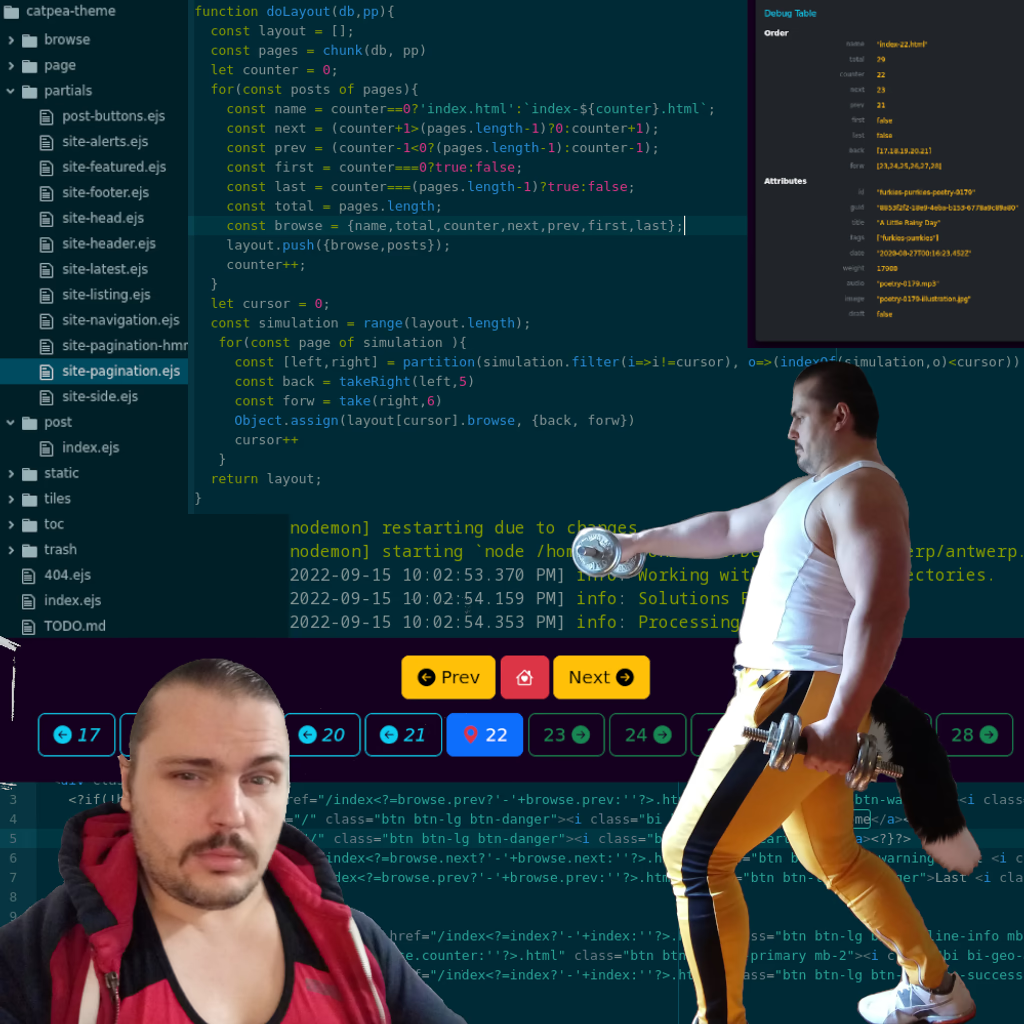
I’m almost finished a program that builds a simple website by scanning folders of text files; it relies on many little “library” modules that you plug in to extend its capabilities. The code is written in a single‑line, chained style where each tiny routine passes its output to the next one, which makes it elegant but hard to read. Because the site contains roughly a thousand poems and a hundred video playlists, the program must repeat many operations over and over again—so I’ve added a cache that memorizes expensive calculations (like converting 1 000 seconds into minutes and seconds) so they’re not recomputed each time. I also built an image‑processing routine to assemble thumbnail images into a cover photo for each video series, which required downloading missing thumbnails, fitting them optimally, and stitching them together; the whole project illustrates how small, modular steps can become surprisingly complex yet remain delightful to develop.